Book Over Phone: How to turn invisible time into visible time, and scrolling into reading
Author: Dr. Jon Beale
I've been trying to find the time to re-read The Odyssey before Christopher Nolan's new film about it comes out next month. A careful read is roughly 15 hours. At 30 minutes a day, that’s a month. The film lands on 17th July, so I’d better get cracking.
The obvious fix is to block out 30 minutes every day. But in our era of “time famine,” most of us don’t feel we can spare 30 minutes without taking it from somewhere else. The things we tend to raid for time are the things we can least afford to lose: we sleep less, we exercise less, we see the people we love less. None of that is a trade we want to make.
But what if those 30 minutes are already available to us? What if the problem is that we can't see them?
You don’t have a time problem. You have a visibility problem.
This is the reframe we’ll focus on in our free Flow Lab Masterclass tomorrow. Many high performers aren’t losing time to laziness or distraction. They're losing it to invisibility.
The hours are going somewhere, just not somewhere they chose. And the hours often aren’t going somewhere that reflects what matters most to them.
You can't redesign what you can't see. So before we try to schedule time to read more, it's important that we get honest about where our time is actually going.
Where the hours actually go
There's a whole category of time that almost never shows up on a calendar. The two-minute phone check that becomes half an hour. The 15-minute transitions between meetings that add up to an hour across a day but get absorbed into nothing. This is invisible time.
The largest sources of wasted time come from low value activities: needlessly checking email, spending too long in meetings, and – worse of all – scrolling. The final of these is for many people the worst culprit; the average person spends over four and a half hours a day on their phone.
It gets worse, because the cost isn't only the time we spend doing these things. When you switch attention from a task to something else, it usually takes time to return your focus to the original task. In a 2005 study of how people work, attention expert (and one of our former guest speakers) Gloria Mark and her colleagues found that when someone resumed a task after an interruption, it took them an average of almost 25 and a half minutes to return to the original task.
On top of this, there’s “attention residue”: the residual impact of something that occupies our attention. When we switch attention, it often takes time for our attention to fully switch over, especially if we were deeply concentrating on something or it resonated with us emotionally. So, even what seem like short interruptions are rarely short.
People often cannot identify where exactly their lost time is going. They reach the end of the week and wonder where all the time went.
This is not only a productivity problem. It's also a visibility problem.
For example, if we simply take a look at our screen time and where that’s going (which, if you’re using an Apple device, you can quickly do by clicking on “Screen Time”), chances are that finding 30 minutes a day to read a book shouldn’t require any sacrifices to sleep, exercising, socializing, or anything else you value highly. Finding 30 minutes then simply becomes a question of conversion: turning some of the wasted, invisible time into useful, visible time.
Making the invisible visible
Converting this time successfully and consistently takes two moves. We’ll cover these in tomorrow’s masterclass.
The first is to name your activity values. Not lofty, aspirational values, but the handful of activities that you most want to spend your time doing. Deep work, learning, recovering, spending quality time with the people you love. Writing these down is the first real act of visibility, and most people have never done it. We’ll do this in tomorrow’s masterclass.
The second is to look honestly at where your time actually went over the last week, across your calendar, your screen time, and the hours that show up on neither. Then you place the two pictures side by side: what you said matters, and where your time actually goes.
The gap between them is where your missing hours are hiding. For some of us, a good chunk of that gap is the difference between the reading we'd love to do and the scrolling we actually do.
Redesign: book over phone
Once you can see the gap, you can design around it, and design beats willpower every time. Here's the simplest system I know for converting scroll time into reading time. I call it book over phone.
When you sit down to work, put your phone in a different room. The research on this is clear: just having your phone nearby – especially in your visual field – drains cognitive performance.
Put the book you're reading on top of your phone. Now, the next time you reach for the phone, the first thing your hand meets is the book.
Whenever you're tempted to pick up the phone, read a page instead. If that’s not possible, a paragraph is fine. Whatever the amount, you've turned a moment of distraction into a moment of reading.
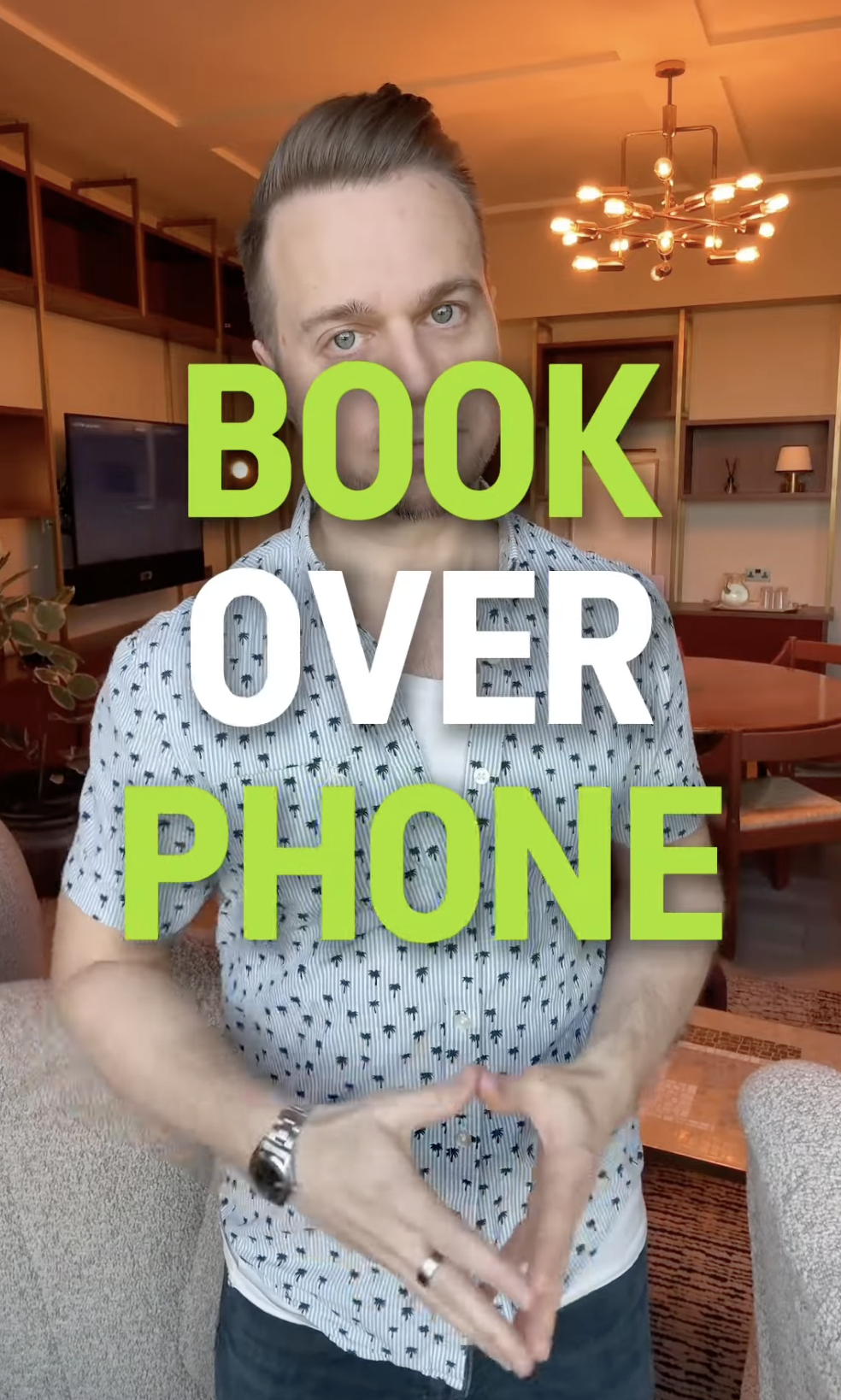
You can watch a video on this here.
If you want to go deeper, layer in the audiobook on your commute. I’ve found I retain far more when I also listen to the book I’m currently reading.
Ian McKellen and Stephen Fry have both narrated versions of The Odyssey (albeit different versions – McKellen’s is of a translation, Fry’s is of his re-telling of the myth). That’s an impossible choice, but I spend a lot of time cycling and on the subway, so… I might just listen to both.
We can apply this process to many other things we keep meaning to do.
Want to learn the piano? Hide your phone under it. Piano over phone.
Want to learn a language? Put your flashcards on top of your phone. Language over phone.
Want to meditate more? Put your meditation pillow on top of your phone. Meditation over phone.
The trick is to make the activity you value easier to start than the distraction.
The five hours you didn’t know you had
We rarely need to sacrifice sleep, exercise, or quality time with the people we love to make room for the other things we truly care about. We just need to replace something that's quietly stealing our time with something worth investing it in.
So the next time you catch yourself thinking, "I'd love to do that, but I don't have the time," ask yourself: “where can I turn invisible time into visible time?”
This is exactly what tomorrow’s free masterclass is for:
The Five Hours You Didn't Know You Had
Tuesday 9th June, 12-1pm ET
This will be built around a single diagnostic practice, our new Values-Time Audit. We'll look at where your time is actually going, across your calendar, your screen time, and the hours that never show up on either, and compare that against what you've said your priorities are.
The gap between those two pictures is where your five hours are hiding.
Join the masterclass here.
Reading this after the masterclass took place? You can catch the recording in the Flow Lab.

drjonbeale.com | @drjonbeale