Why Doing Hard Things Makes Life Better
Author: Dr. Jon Beale
When something feels difficult, we often try to make it easier. But the next time you’re tempted to do this, ask yourself: isn’t the difficulty going to lead to more growth?
Here’s a principle I try to live by: when I find something difficult, this gives me more reason to do it than not to do it. The more difficult I find it, the greater the reason to do it.
This is because in many cases, the harder something feels, the more we’ll gain from doing it.
I started trying to live by this in 2019, when I was doing research on the science of learning, which has found that learning is strongest when it’s effortful. The more effort you make to perform a cognitive task, the more you’ll retain the knowledge and understanding you gain.
This is because effortful cognitive activities have a greater impact on neuroplasticity. The more effort we make, the more we form new and stronger neural pathways in the brain. This improves our retention of what we’ve learned in our long-term memory, and our fluency in retrieving and applying our knowledge. If learning requires little effort, it’s likely to be forgotten quickly and only generate surface-level gains.
Effortful learning also offers health benefits. For example, one of the most demanding cognitive activities is learning a new language. Learning a second language and using it daily over many years during adolescence or midlife can delay neurocognitive decline. It’s related to later onset of dementia by five to seven years compared to monolinguals.
This is why some learning methods that feel harder actually improve learning. These are known as ‘desirable difficulties’. For example, if we leave a reasonable gap of time between learning something and being tested on it, we start to forget what we learned and so have to think harder to retrieve our knowledge. The additional effort means that retrieving our knowledge feels harder, but this process strengthens our knowledge. The difficulty is therefore desirable.
I came to think that we can apply the idea behind desirable difficulties more widely in our lives. We often experience growth – not just cognitively, but also physically and emotionally – from difficult experiences. So, before opting for easier alternatives, we should ask ourselves if the difficulty we face is actually desirable. It often is.
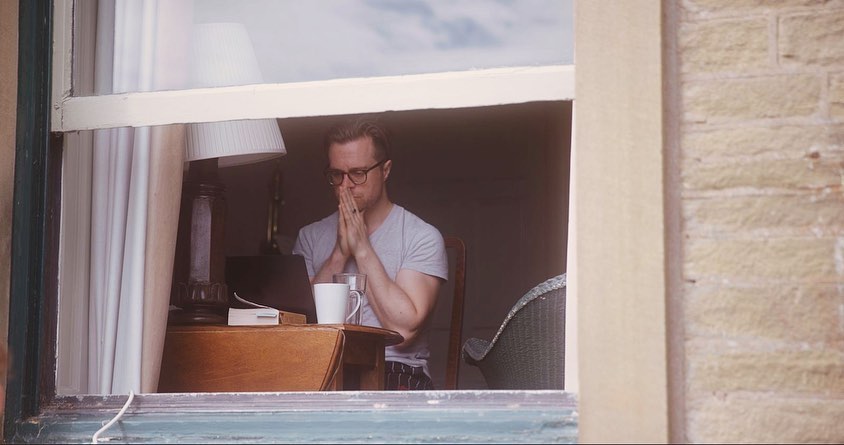
Struggling with writing, but learning more through the struggle (credit: Matt Maude at Write Club London)
In physical activities the relationship between difficulty and growth is clearer. The more you exert yourself physically, through cardiovascular or strength training, the greater your fitness or strength will become – as long as you use good techniques and recover effectively.
For example, when you lift heavy weights, you stress the muscles you’re training. The muscles break down, but after effective recovery, your strength increases. This leads to neurological adaptation, where adaptive changes take place within the nervous system that enable us to better activate and co-ordinate the muscles we’ve trained. This process is called supercompensation.
Emotional challenges can also be powerful sources of growth. Think how much you’ve built your character by enduring emotional difficulties. For example, how heartbreak or setbacks have built your resilience, grit and patience.
Overcoming shared adversity can also strengthen relationships. Think how much your relationship with a loved one improved after you supported one another through grief, or patched things up after a conflict.
This principle has limits, though. Not every difficulty is beneficial.
For many activities – but not all – the more difficult we find it, the more we’ll benefit from doing it. Some people never fully recover from trauma. You won’t benefit from an advanced coding class if you’ve never coded. And you risk severe injury skiing if you haven’t done basic training. The greatest growth usually happens when the difficulty is challenging but manageable.
The most common theme across all our Flourish FM episodes is that for us to flourish, it’s vital that we learn how to cope with adversity. This topic has emerged spontaneously in many of our conversations, but it was the key focus of our most recent interview, with writer Michael Easter. The central theme in his work is how we can improve our lives by doing hard things. He’s published three excellent books on this: The Comfort Crisis, Scarcity Brain and Walk With Weight. We’ll release the episode next month.
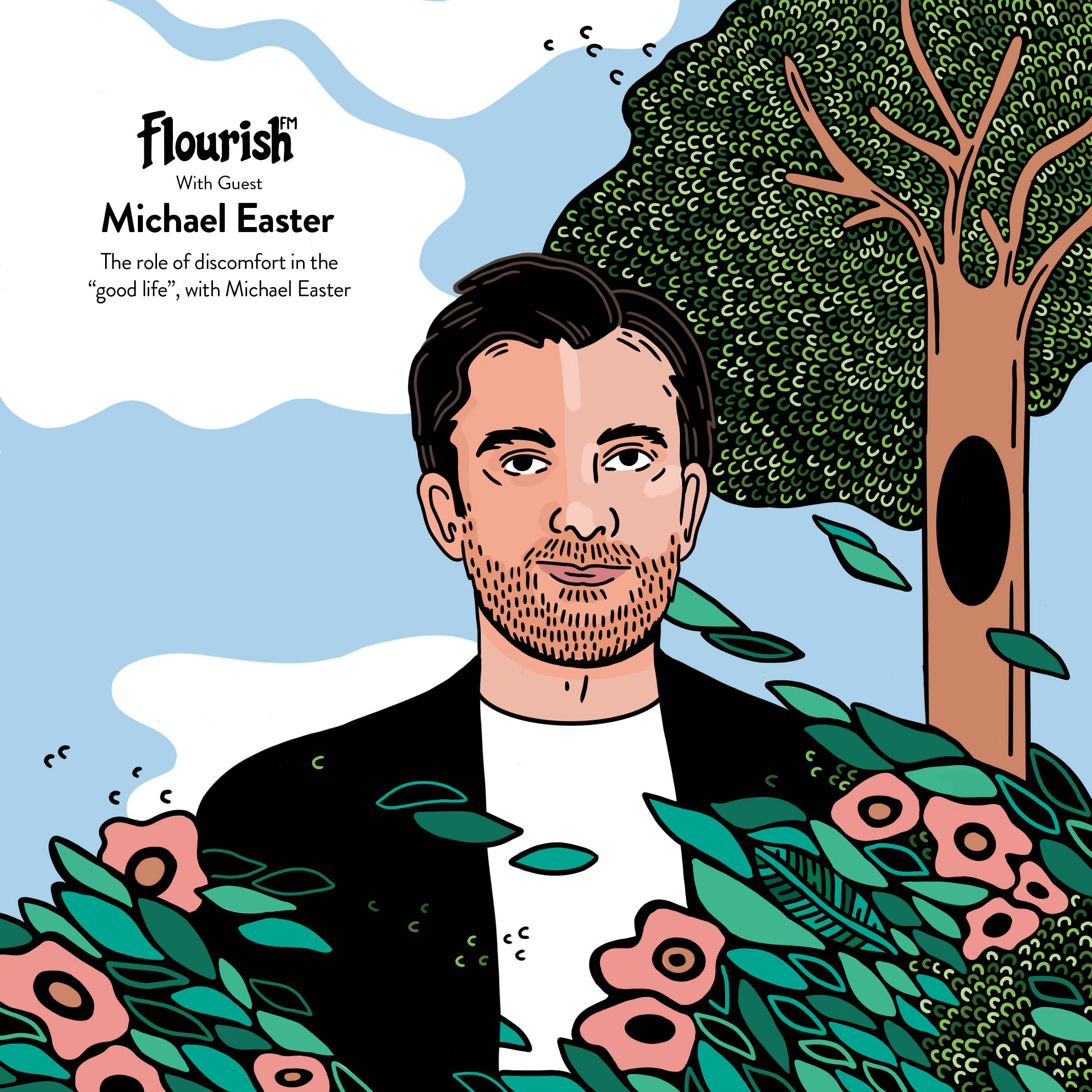
Artwork by Kelly Malka
In The Comfort Crisis, Easter argues that modern life has become too easy, to the detriment of our health and well-being. He argues that an antidote is seeking out what he calls ‘purposeful discomfort’: intentional acts of voluntary discomfort. These don’t need to be extreme; they can be small, everyday actions in all areas of our lives – cognitive, physical or emotional.
For example, try figuring out the route before opening Google Maps. Try doing the arithmetic with pen and paper before using a calculator. Try answering the question yourself before asking ChatGPT. Use these tools to check your thinking rather than do your thinking for you.
Take the stairs rather than the escalator or elevator. If you’re in a rush, walk up the escalator. When you shop for groceries, carry a basket rather than pushing a trolley.
The next time you face a difficult conversation, have it right away rather than delaying and ruminating over it. Schedule time tomorrow to reply to that message you’ve been avoiding.
Here we’re simply adding a little friction to our everyday activities to promote growth. As Easter points out, modern life removes friction wherever possible. But friction is often where growth happens.
So:
drjonbeale.com | @drjonbeale
Invitation to our Lean In Challenge
We're running a 21-day "Lean In Challenge," starting May 4th 2026, in which we'll engage in daily activities of voluntary difficulty to build our skills in leaning into challenges. It's free to join. Learn more and sign up here.
We recently ran a Flow Lab Masterclass on the topic of this blog. You can watch the recording and see the slide deck by joining the Flow Lab, for free, at the link below.